Guinea Pig Care
If you are considering adding a guinea pig to your family or currently have a guinea pig as a pet, our team at Green Dog Dental & Veterinary Center is here to support you and your wheeking pal. We offer exotic animal health care and understand their unique needs. We know guinea pigs can be great pets for families and individuals alike, but they need special health care to keep them healthy and happy. As a practice that sees guinea pigs regularly, we want pet parents to feel confident about day-to-day husbandry, nutrition, behavior, and when to seek medical care for their pet. If you have questions at any point, our team at Green Dog Dental & Veterinary Center in Van Nuys, CA is here to help! You can always call us at (310) 606-2407.
Guinea Pig Basics
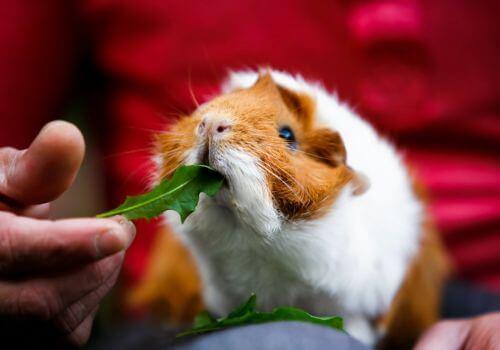
Guinea pigs, or cavies as they’re affectionately called, are cheerful and friendly little rodents that usually live between 4 to 8 years, with around 5 years being the average in a caring home. They’re known for their sweet and gentle nature, rarely biting, and their fun vocal personalities, which make them a great fit for families ready to learn how to care for them.
These socialable pets also come in a wide range of coat types and patterns, from English/Common (short hair) to Abyssinian (rosettes) and Peruvian (long hair), along with many mixes of coats and colors. Learning about your cavies' requirements is the first step in optimal care, so let's discuss what your pet needs to thrive.
Your Guinea Pigs' Ideal Habitat
Did you know guinea pigs can't climb? That's right, guinea pigs are ground-dwelling, non-climbing animals that need ample floor space. It is recommended that their cage size should be at least 2ft x 3ft, but larger is strongly recommended. There are a lot of options for cages and enclosures for guinea pigs, but the two basic rules are to choose a solid floor enclosure (no wire bottoms) to protect their feet, with sides ~12 inches high.
- Bedding: Use a dust-free paper-based bedding, hay, commercially available bedding pellets, or other recycled paper products. Spot-clean daily and refresh bedding frequently to control odor and ammonia.
- Placement & temperature: Keep cages indoors in a quiet, draft-free area out of direct sun. Guinea pigs tolerate cool better than heat; aim for 65–79°F with good airflow to prevent heat stress.
- Water: Guinea pigs should have access to fresh, filtered water at all times, which may be provided in a bowl or a bottle. Check water bottles daily for clogs (pellets, hair, mineral deposits) and wash the bottle/bowl regularly with hot, soapy water; rinse thoroughly.
Guinea Pig Nutrition and Vitamin C Requirements
Once you’ve created a safe and comfortable home for your guinea pig, the next step is making sure their diet supports their health. Guinea pigs are strict herbivores and cannot make their own Vitamin C, so they require it from their diet every day. It's important to know that inappropriate diets are a leading cause of illness, so feeding your guinea pig correctly is imperative for their long-term health.
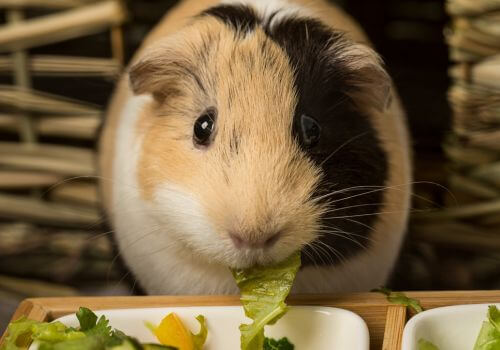
- Unlimited grass hay: Fresh timothy, orchard grass, oat hay, or similar grass hay should always be offered to adult guinea pigs. Alfalfa (legume) hay should be offered to young, growing guinea pigs with a transition to grass hay at 4-6 months of age. Pregnant or lactacting guinea pigs should be provided both grass hay and alfalfa.
- Dark leafy greens & veggies: Provide a daily variety of dark leafy greens and herbs such as romaine, green leaf lettuce, red leaf lettuce, cilantro, basil, bok choy, endive, and carrot tops. Introduce new greens gradually and continuously rotate.
- Pellets: Limited amounts of high-quality, uniform timothy hay-based pellets, fortified with Vitamin, can be given in addition to hay and leafy greens. Pellet mixes or pellets that contain corn, wheat, dried fruits, and/or nuts should be avoided. Because Vitamin C degrades over time, use pellets within ~90 days of the mill date.
- Fruits & treats: Offer guinea pigs safe treats sparingly. Timothy hay-based treats are available. It is recommended that larger treats be split into multiple servings. Avoid high-sugar treats and gas-producing veggies.
- Supplements: Many guinea pigs need additional Vitamin C (often 10–30 mg/day). We typically recommend vitamin C tablets rather than adding vitamins to water (they degrade quickly and may alter taste).
- What guinea pigs should not eat: Avoid iceberg lettuce, onions, garlic, chocolate, seeds/nuts, bread/crackers, and any processed human foods.
Our team at Green Dog Dental & Veterinary Center will discuss your pet's nutrition at every visit and help you tailor the diet based on age, weight, and medical history.
Guinea Pig Health and Veterinary Care
Do guinea pigs need to go to the vet? Yes! It's a common misconception that guinea pigs don't need to see a doctor. The truth is that guinea pigs benefit from an annual wellness exam (twice yearly for seniors). Your guinea pig's health can change quickly, and because they mask illness, early detection can be life-saving.
- Choosing a vet: Look for an exotic companion mammal veterinarian who routinely sees guinea pigs.
- Parasites: Guinea pigs are susceptible to parasites. Never apply dog/cat products without veterinary guidance, as many are harmful/toxic to guinea pigs.
- Preventive care: Regular examinations and following veterinary recommendations can help your guinea pig live a happy, healthy life!
Common Guinea Pig Health Concerns
Guinea pigs can become ill quickly, so it’s important to reach out to us right away if you notice any of the following signs:
- Lethargy, hiding, or a marked change in behavior
- Eating less or not at all, fewer or misshapen stools, diarrhea
- Tooth grinding (pain), drooling, wet chin, facial swelling
- Straining to urinate, urine scaled, incontinence
- Hair loss, itching, scabs, or other changes to the skin
GI stasis is an emergency. If your guinea pig stops eating or producing stool, call (310) 606-2407 right away.
Behavior, Activity, and Enrichment for Your Guinea Pig
Because guinea pigs are active, social animals, they thrive on consistency and interaction. They do best with a predictable daily routine for feeding, playtime, and handling, which helps them feel safe and secure. Cavies are also quite vocal, using a variety of sounds to communicate with their people and with each other. Excited “wheeks” usually mean your guinea pig is excited, while softer purrs are a sign they’re relaxed and content. Louder squeals or sharp squeaks can signal fear or stress, so learning what these sounds mean and giving your guinea pig safe ways to express themselves aids in keeping them happy and healthy.
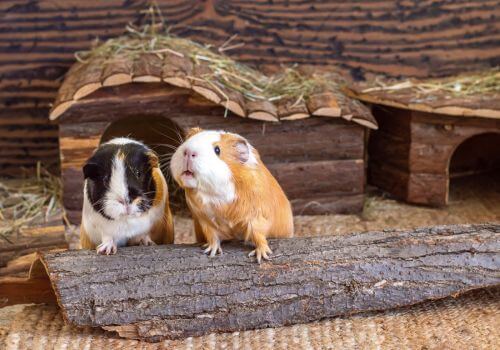
- Floor time: Offer supervised play in a penned, chew-proof area (no accessible cords, baseboards, or houseplants). Smooth floors make cleanup easier!
- Hideouts & tunnels: Guinea pigs are very active and enjoy running through tunnels. Provide multiple shelters so cage mates can avoid each other as needed to help reduce stress.
- Foraging & chew toys: Safe cardboard, paper bags filled with hay, and willow/untreated wooden chews support natural behaviors and dental wear and offer mental stimulation.
- Handling: Many guinea pigs prefer lap time to being carried around. Slow, calm approaches build trust.
- Pairs & groups: Guinea pigs are social and tend to establish a pecking order, typically with one male in charge. Overcrowding may lead to fighting and non-neutered males may be aggressive towards another male even without a female being present. When keeping non-same sex pairs together, make sure they are spayed or neutered!
Veterinary Care for Guinea Pigs at Green Dog Dental & Veterinary Center
At Green Dog Dental & Veterinary Center, we understand how special guinea pigs are. Whether you’re setting up your first habitat, planning a healthy diet, navigating bonding, or noticing a potential health concern, our veterinary team is a trusted resource for guinea pig care in Van Nuys, CA. We offer wellness exams, spay/neuter counseling, healthcare guidance and recommendations, and urgent care for time-sensitive issues.
If you live in or near Van Nuys, CA, and are looking for pet care, contact us at (310) 606-2407 to make an appointment. You can also email us at [email protected].
Don't forget to follow us on social media: Facebook, Instagram.